The Impact of Domestic Abuse on Children
The impact of domestic abuse in childhood has long term effects into adulthood.
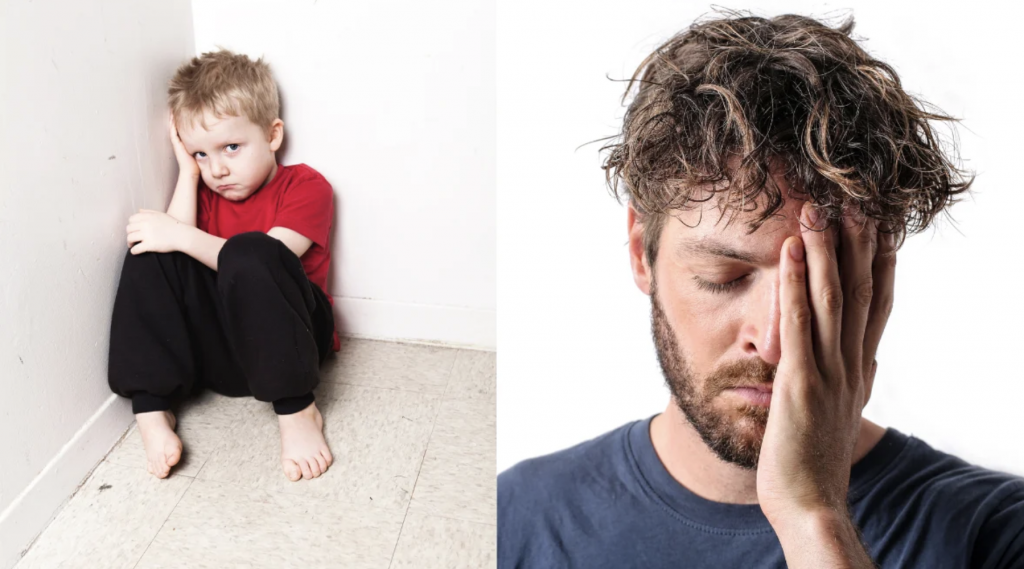
Children can see a domestic incident taking place.
Witnessing domestic abuse can be traumatising for children as they are watching their much loved parent get hurt. The very person who is supposed to protect them becomes helpless in this moment. Children can often feel confused when witnessing a domestic incident as they love both parents but don’t understand why someone they love can act in abusive ways.
Children can hear a domestic incident taking place
This can often be more frightening for the children than the seeing and witnessing of the incident as they use their imagination to process and try to understand what is happening. Often parents will say that their child didn’t witness the incident, as “they were asleep in bed,” however, most of the time children are awoken by a domestic incident and they are listening to what is happening in the home.
Children see parents’ injuries after a violent incident
Seeing a parent’s injuries can have a huge emotional impact on children. Its a reminder that harm has been inflicted on their parent and can leave a child traumatised. Often parents will try to hide their injuries or make up reasons as to why and how they got their injury, again this can cause confusion for the children.
Children can witness parents’ distress after an incident
Seeing a parent distressed can make children feel very unsettled. Sometimes children will refuse to go to school so they can stay at home and take care of their non-abusive parent, or they may want to ensure that no further incidents happen so they stay home or school refuse so they can “monitor” the situation. This can have a long-lasting impact on their education and social skills as they are not spending time with their peers or in their learning environment.
Children can get hurt in the crossfire of a domestic conflict and/or incidents
It is common for babies to be injured as a result of domestic abuse as they are completely reliant on adults for all of their needs to be met. Babies and children’s needs can be neglected by the non-abusive parent if the abuser is demanding all their needs be met above the child. In these occasions the non-abusive parent may feel the only safe option is to put the needs of the abuser first to prevent further abuse or violence.
Babies often get hurt in the crossfire of a violent incident as the non-abusive parent may be carrying the baby when they are being physically assaulted resulting in the baby also being hurt. Some children will want to intervene in a violent incident in order to try to protect their non-abusive parent or to attempt to stop the event from happening.
There have been many incidents of children becoming a human shield to try to protect their parent resulting in them also getting hurt. If a child is injured as a result of domestic abuse this is a serious concern that would meet threshold for statutory intervention from child protective services.
Unborn babies can be affected by domestic abuse
Domestic abuse statistically escalates in pregnancy, and a woman is more likely to be assaulted by her partner when she is pregnant. This can be for many reasons such as the woman putting the unborn baby’s needs before their abusers, the woman being more physically vulnerable in pregnancy, lifestyle changes due to pregnancy and the woman may not want to be as sexually active as she was before.
Women who have been physically assaulted in pregnancy are more likely to miscarry, have a still born baby, or go into premature labour. In order to safeguard unborn children, it is imperative that victims’ of domestic abuse get the support they need. Midwives, if its safe to do so, routinely ask mothers-to-be during ante-natal visits if all is well at home and if that they feel safe or ask if there is any conflict wthin the home. This is to assess risk and to be able to offer support to the mother.