Mandatory Reporting
Mandatory Reporting for Adults Safeguarding
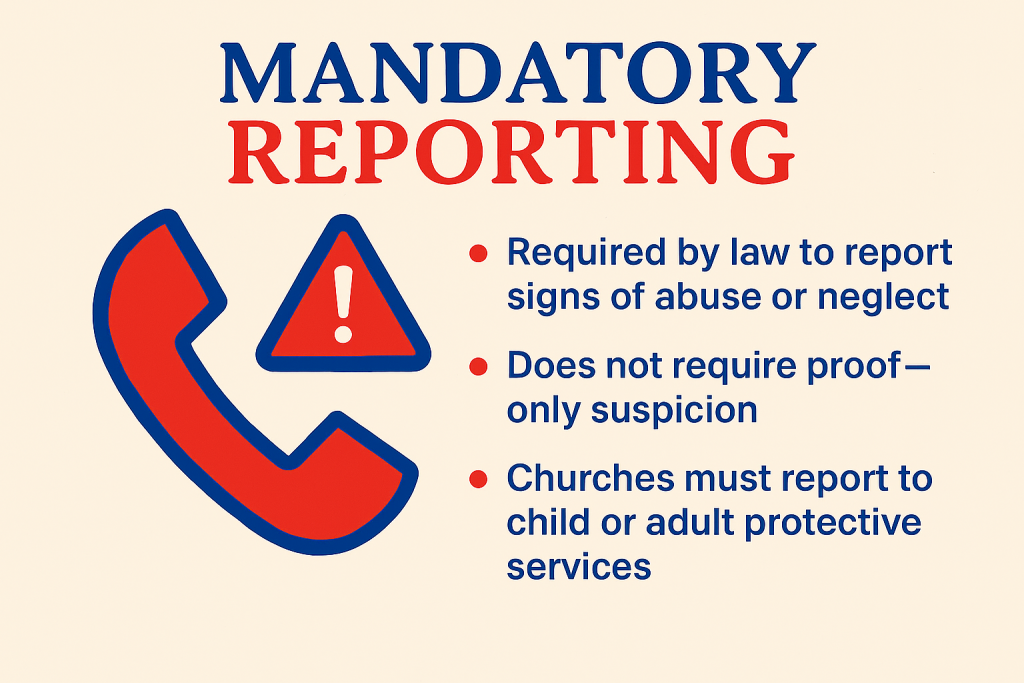
1. Is There Mandatory Reporting for Adults?
Yes—but it is limited and varies by state.
Unlike children, not all adults are automatically protected by mandatory reporting laws. Mandatory reporting usually applies only when the adult is legally defined as a “vulnerable adult,” “elder,” or “adult with a disability.” These laws are state‑based, not federal, and requirements differ widely across the U.S. [ncea.usc.edu], [napsa-now.org]
2. Who Is Considered a “Vulnerable Adult”?
Most states define a vulnerable adult as someone 18 or older who:
- Has a physical, mental, cognitive, or developmental disability, or
- Is an older adult (commonly 60+ or 65+), and
- Is unable to protect themselves from abuse, neglect, or exploitation
Age alone is not enough in many states—capacity and impairment matter. [uslawexplained.com], [congress.gov]
3. What Types of Abuse Must Be Reported?
Mandatory reporting laws for adults typically cover:
- Physical abuse
- Sexual abuse
- Emotional or psychological abuse
- Neglect or abandonment
- Financial exploitation (very important in adult safeguarding)
- Self‑neglect (in many states) [ncea.usc.edu], [legalclarity.org]
4. Who Is a Mandatory Reporter for Adults?
This varies by state, but commonly includes:
- Healthcare professionals
- Social workers and case managers
- Mental health professionals
- Law enforcement
- Caregivers and home health workers
- Long‑term care facility staff
- Clergy members in some states
- Financial institution employees (banks, investment advisors)
Some states have universal reporting, meaning anyone who suspects abuse must report it. All states allow voluntary reporting by anyone. [ncea.usc.edu], [napsa-now.org], [mandatedreporter.com]
5. Where Are Adult Safeguarding Reports Made?
Primary agency:
Adult Protective Services (APS)
- Every state has APS (though names and procedures vary)
- APS investigates abuse occurring mainly in private homes and community settings
If immediate danger:
📞 Call 911
Law enforcement may work in coordination with APS. [pfs2.acl.gov], [congress.gov]
6. Are Adults Allowed to Refuse Help?
Yes—this is a major difference from child safeguarding.
If a vulnerable adult:
- Has decision‑making capacity, and
- Clearly refuses services
APS may respect that refusal, even if risk remains. APS must balance safety with adult autonomy, which can be difficult and frustrating for reporters. [pfs2.acl.gov], [justice.gov]
7. Confidentiality, Consent, and Trauma‑Informed Practice
From a trauma‑informed perspective:
- Adults should be involved in decisions whenever possible
- Reporting should be explained clearly and calmly
- The adult should never be shamed or blamed
- Consent matters—except when law requires reporting
Unlike children, there is no universal override of confidentiality for adults unless vulnerability criteria are met. [ncea.usc.edu], [therafocus.com]
8. Legal Protections and Penalties
Protections:
✅ Good‑faith reporters are generally immune from civil or criminal liability
✅ Reports can often be made confidentially or anonymously
Penalties:
❌ Mandatory reporters who fail to report may face:
- Fines
- Criminal charges
- Professional discipline
[ncea.usc.edu], [napsa-now.org]
9. What This Means for Churches and Ministries
Churches are not universally mandated reporters for adult abuse, but best practice is:
- Treat all credible concerns seriously
- Know if clergy are mandatory reporters in your state
- Never promise confidentiality before hearing details
- Document facts (not opinions)
- Report concerns of elder abuse or exploitation promptly
- Keep adult autonomy central whenever legally possible
Many religious institutions adopt adult‑safeguarding policies even where the law does not strictly require reporting. [ncea.usc.edu], [napsa-now.org]
10. Key Difference: Children vs Adults
| Area | Children | Adults |
|---|---|---|
| Mandatory reporting | Universal | Limited / conditional |
| Consent required | No | Often yes |
| Right to refuse help | No | Yes (if capacitated) |
| Primary agency | Child Protective Services | Adults Protective Services |
11. Federal Context
There is no CAPTA‑equivalent federal law for adults. Adult safeguarding systems developed separately and remain state‑driven, supported by programs like the Elder Justice Initiative. [justice.gov]