Being a Trauma Informed Church
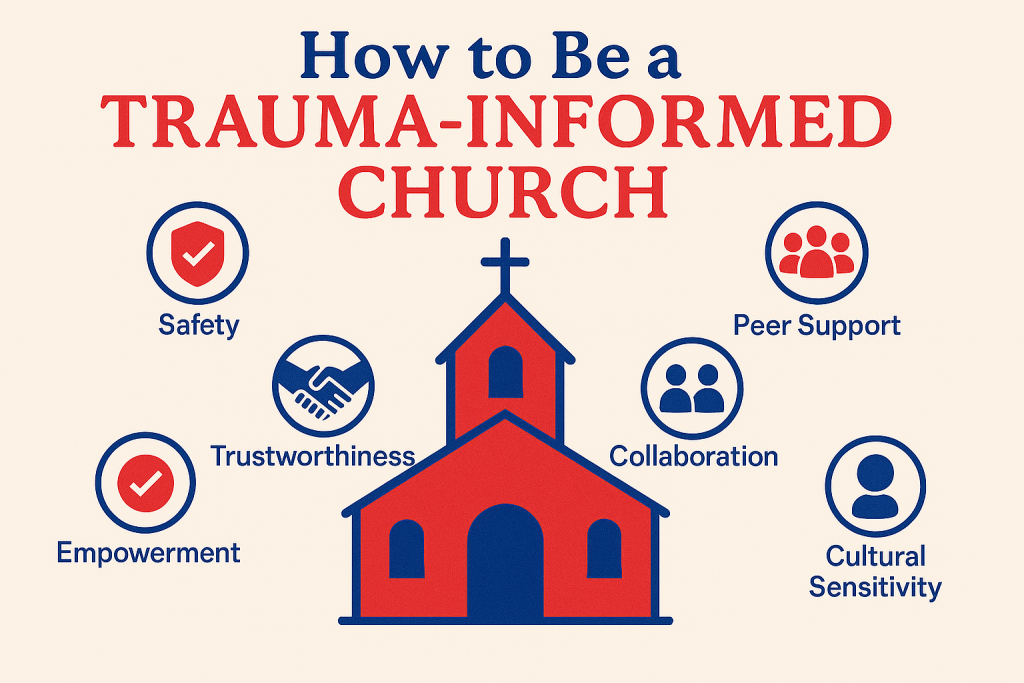
✅ What It Means to Be a Trauma‑Informed Church
A trauma‑informed church intentionally creates an environment where safety, compassion, consent, respect, and empowerment guide everything—from worship to pastoral care to community life.
Trauma‑informed does not mean becoming therapists or focusing everything on trauma.
It means structuring church life so that people who have experienced trauma (which is a large proportion of any community) can feel safe, valued, and supported.
✅ The Six Core Principles of a Trauma‑Informed Church
These principles are widely used in trauma‑informed practice.
1. Safety
Create emotional, spiritual, and physical safety.
Practical steps:
- Provide quiet spaces or “step‑out spaces” for overstimulation or overwhelm.
- Be clear about what will happen during services (e.g., “We will turn down the lights now”).
- Avoid sudden loud noises or surprises.
- Let people sit wherever is comfortable—don’t pressure participation.
2. Trustworthiness & Transparency
Trauma often involves betrayal or unpredictability.
Build trust through clarity, consistency, and honesty.
Practical steps:
- Be clear about expectations—no “hidden rules.”
- Ensure safeguarding policies are visible, understood, and followed.
- Communicate changes (worship format, leadership decisions) openly.
- Make leadership accountable and accessible.
3. Peer Support & Community
Healing often happens through caring relationships.
Practical steps:
- Offer small support groups or peer‑led gatherings.
- Encourage testimony only when someone freely chooses it—no pressure.
- Train volunteers in empathetic listening—not fixing, correcting, or preaching at.
4. Collaboration & Mutuality
Remove power imbalances where possible.
Practical steps:
- Train leaders to minister with people, not to people.
- Involve congregation members in decision‑making where appropriate.
- Encourage shared leadership in groups and ministry teams.
5. Empowerment, Voice & Choice
Trauma often takes away agency. A trauma‑informed church gives it back.
Practical steps:
- Give options in worship: stand, sit, sing, or be silent.
- Ask consent before laying hands on someone and ask if you can pray for them.
- Avoid pressuring people emotionally (e.g., “Come to the altar now!”).
- Encourage people to set boundaries without guilt.
6. Cultural, Historical & Gender Sensitivity
Be aware of how trauma intersects with identity.
Practical steps:
- Acknowledge differences in lived experience (race, gender, disability, class).
- Use inclusive language.
- Ensure representation in leadership at the same time not compromising any theological differences.
- Create a safe environment for those healing from spiritual abuse or religious trauma.
✅ Steps a Church Can Take Immediately
1. Train your leaders and volunteers
Offer training on:
- trauma awareness
- how to respond to disclosures
- safeguarding
- how to pray in trauma‑sensitive ways
- avoiding triggers and retraumatization
2. Review worship practices
Ask yourselves:
- Are our services sensory‑overwhelming?
- Do we pressure emotional responses?
- Does prayer ministry respect boundaries?
3. Strengthen Safeguarding
Make your policies:
- visible
- simple
- well‑communicated
- consistently applied
4. Build partnerships
Work with:
- local counsellors
- Child services, such as schools, preventative and protective services.
- domestic abuse organizations
- mental‑health networks
This ensures the church knows when and how to refer people to professional help.
5. Protect spiritual integrity
Trauma‑informed does not mean weakening theology.
It means:
- teaching gently
- avoiding shame‑based messages
- balancing truth with compassion
- emphasizing God’s unconditional love
✅ Examples of Trauma‑Informed Language
Instead of:
❌ “You should forgive and move on.”
Try:
✅ “Healing is a journey. We’re here to walk it with you.”
Instead of:
❌ “You need to have more faith.”
Try:
✅ “It makes sense that you feel this way. God meets us where we are.”
Instead of laying hands on someone without asking:
✅ “Would you like me to pray with you? Is touch comfortable for you, or should I pray from here?”
✅ Common Pitfalls to Avoid
- Spiritualizing trauma instead of acknowledging emotional and psychological aspects.
- Pressuring people to share their story before they’re ready.
- Using worship to trigger emotional responses as a demonstration of spirituality.
- “Fixing” people instead of listening.
- Ignoring leadership accountability, which can invite church‑based harm.